British students arrive at US recruiting looking for a spring week and conclude the Americans do not run one. They do, but under other names and on another calendar, and the mismatch costs people a year. The US equivalent is a family of short programmes aimed at first and second years, sitting under labels like sophomore insight, early insights, discovery, exploration and immersion, plus a large set of diversity-focused programmes that serve the same function. Understanding what they are, and how much earlier they sit than a British reader expects, is most of the work.
What they actually are
A British spring week is roughly what the name suggests: a week, in the Easter vacation, in the first year of a three-year degree, and a well-worn route into a second-year summer internship. The American programmes serve the same purpose and look different doing it. They are typically shorter, often a single day or two or three, frequently virtual, and structured around panels, skills sessions and networking rather than a desk to sit at.
What matters is what they lead to. At most large banks a strong showing converts into an accelerated route to the junior-year summer analyst interview, sometimes bypassing the general application entirely. That is the same mechanism a spring week runs on, and it is the reason these programmes are worth as much attention.
- Sophomore insight programs: aimed at second years, the closest direct analogue to a spring week.
- Freshman or first-year discovery days: earlier, shorter, more introductory, and much less well known.
- Diversity programs: run under a firm's inclusion banner, often with the strongest conversion into interviews, and open to more people than candidates assume.
- Women in finance programmes: a distinct and long-established strand at most large banks.
The timing is the part that catches people out
The American recruiting calendar runs materially earlier than the British one, and the gap has widened over the last decade rather than closed. A UK student does a spring week in the Easter of first year and applies for a summer internship in the autumn of second year, comfortably ahead of the summer that follows.
In the US, the summer analyst class for a given year is very often filled during the spring of sophomore year, before that student has done any finance internship at all. The insight programmes therefore sit even earlier, opening in the autumn or winter of sophomore year and sometimes in freshman year. A student who starts looking in the spring of second year, on a British instinct, is frequently a full cycle late.
- Applications for insight programmes commonly open in the autumn term and close within weeks, not months.
- Many are first come, first served in practice, because the cohorts are small and reviewed on a rolling basis.
- Because the calendar moves, treat every date you read anywhere, including here, as needing confirmation against the firm's own careers page before you rely on it.
Get told when these open
US insight programmes open in the autumn, close within weeks, and are renamed between cycles often enough that last year’s dates are close to useless. Leave your email and we will tell you when each programme goes live.
One email when applications open, plus a short weekly round-up through the cycle. Free, and you can leave at any point.
Why the diversity programmes deserve a closer look
Candidates routinely skip these on the assumption that they will not qualify, and the assumption is often wrong. Eligibility varies widely by firm and by programme, and a good number are open on criteria far broader than the name suggests, including first-generation university students, students from lower-income backgrounds, and veterans.
They also tend to convert better than the general programmes, for an unglamorous reason: the cohorts are smaller and the firm has committed internally to hiring from them. Reading the eligibility text properly, rather than inferring it from the programme name, is one of the highest-return twenty minutes available in the whole process.
What the application actually asks for
The bar is lower than for a summer analyst application, because the firm knows it is talking to someone one or two years out. What replaces technical depth is evidence of genuine, specific interest, and that is where most applications fall down. A sophomore who can name a transaction the bank advised on and say something real about it is doing something the majority of the pile is not.
The written components are usually short, which makes them harder rather than easier. A 200-word answer leaves no room to warm up, so the first sentence has to carry an actual idea.
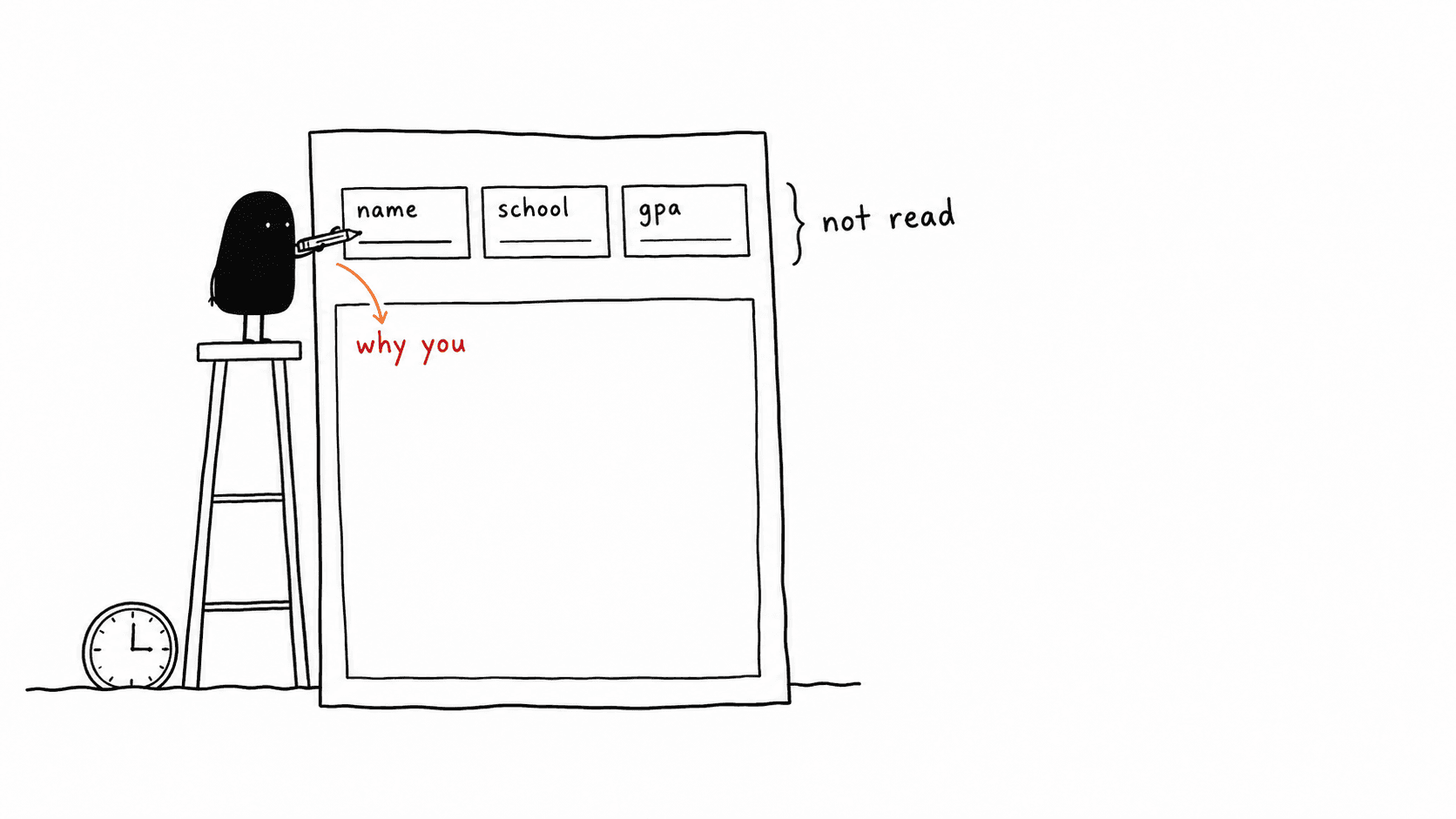
- A one-page resume, US format: no photograph, no date of birth, GPA on the page.
- Short written answers, typically why this firm and why this division, in 150 to 300 words.
- Sometimes a recorded video interview with two or three behavioural questions and no second take.
- Occasionally an online assessment, more often numerical and situational than technical.
If you are British and applying to US programmes
The document changes before the content does. A CV written for a UK market carries several things that have to come off for an American reader, and work authorisation becomes a live question in a way it is not domestically.
The vocabulary is worth adjusting too, not to seem American but to be understood. Penultimate year means nothing to a US recruiter; sophomore and junior do. A 2:1 needs converting or pairing with a GPA equivalent. Spring week itself will not be recognised, so describe what it was.
- Convert the CV to a US resume: photo, date of birth and nationality off, GPA on, one page.
- Use US year names — freshman, sophomore, junior, senior — rather than first, second and penultimate year.
- Check visa sponsorship before investing in an application; some early-career programmes do not sponsor, and the posting usually says so.
Getting told when the windows open
Every date in this piece is a pattern rather than a promise, and these programmes are renamed and rescheduled between cycles more than anything else in campus recruiting. Checking a dozen careers pages by hand every fortnight through the autumn is how people mean to do it and not how anyone actually does.
Making the shortlist rather than the pile
Two things separate applications that convert. The first is timing, and it is unglamorous: applying in the first fortnight of an opening beats a better application submitted six weeks later, because rolling review means the cohort fills as it goes.
The second is specificity about the firm. Every applicant writes that they admire the culture and want to learn. Almost none names the thing the bank did that another bank did not, which is the only sentence in the answer that could not have been sent to a competitor.
Frequently asked questions
Does the US have spring weeks like the UK?
Not under that name, and not in that shape. The equivalent is a family of shorter programmes aimed at first and second years, labelled sophomore insight, early insights, discovery, exploration or immersion, plus a substantial set of diversity-focused programmes. They serve the same function as a spring week, feeding an accelerated route into the junior-year summer analyst class, but they are usually days rather than a week and often virtual.
What year should I apply in?
Sophomore year for most of them, and the autumn term of sophomore year rather than the spring. Some banks run freshman-specific programmes that open even earlier. A student working to a British instinct — spring week in first year, apply for summer in second — is often a full cycle behind, because US summer analyst classes are frequently filled during sophomore spring.
Are diversity programs worth applying to if I am not sure I qualify?
Read the eligibility text before deciding. It varies a great deal by firm and is frequently broader than the programme name suggests, often including first-generation university students, students from lower-income backgrounds and veterans. These programmes also tend to convert into interviews at a higher rate, because the cohorts are small and the commitment to hire from them is internal.
How competitive are they compared with a summer analyst internship?
Less competitive on the technical bar and often more competitive on volume, because the eligibility pool is wider and the cohorts are smaller. What is being assessed is specific, evidenced interest rather than modelling ability, which is why a candidate who can talk about one real transaction stands out against a pile of applications about culture and learning.
Can international students apply?
Often, but check sponsorship before investing time. Some US early-career programmes do not sponsor work authorisation and say so in the posting; others are open to anyone with existing authorisation to work in the US. The insight programmes themselves are sometimes open more widely than the internships they feed, which is worth confirming rather than assuming in either direction.
Where do I find the current dates?
The firm's own careers page is the only reliable source, because these programmes are renamed and rescheduled regularly. Our opportunity tracker carries live early-career programmes with the application link on every row and a deadline where the firm publishes one, which is the fastest way to see what is open right now.
Related guides
See what is open now
The US insight programs track carries every sophomore, freshman and diversity programme we track, grouped by the month each window opens, with the application link on every row.