A spring week is a one-week work experience programme, run in March or April, aimed at first-year university students — it is the first rung of the UK investment banking recruiting ladder and, at most bulge-bracket banks, the primary feeder into summer internship offers. Because it targets students a full two years before a full-time role starts, timing and rolling deadlines matter more here than in almost any other stage of recruiting. Here is how it actually works, what each bank puts you through, and what is genuinely being scored.
The application window
Applications for the most competitive spring weeks — Goldman Sachs, J.P. Morgan, Morgan Stanley, Citi and Barclays among them — typically open in the autumn, broadly across August to October, with a second smaller wave from some banks (historically including HSBC and Deutsche Bank) opening into January. The programmes themselves run the following March or April.
Those months are a pattern, not a promise — individual banks move their windows earlier or later most cycles. Check the spring weeks tracker for which programmes are open today rather than planning against last year’s dates.
Why "rolling deadlines" is the single most important phrase here
Most banks do not run spring week applications to a fixed closing date — they assess and fill places as applications arrive, and close the moment slots are gone, often weeks before any advertised deadline. This means an identical application submitted in week one and week six of the same window can produce different outcomes purely on timing. Waiting for a deadline to approach before applying is the single most common and most avoidable mistake candidates make with spring weeks.
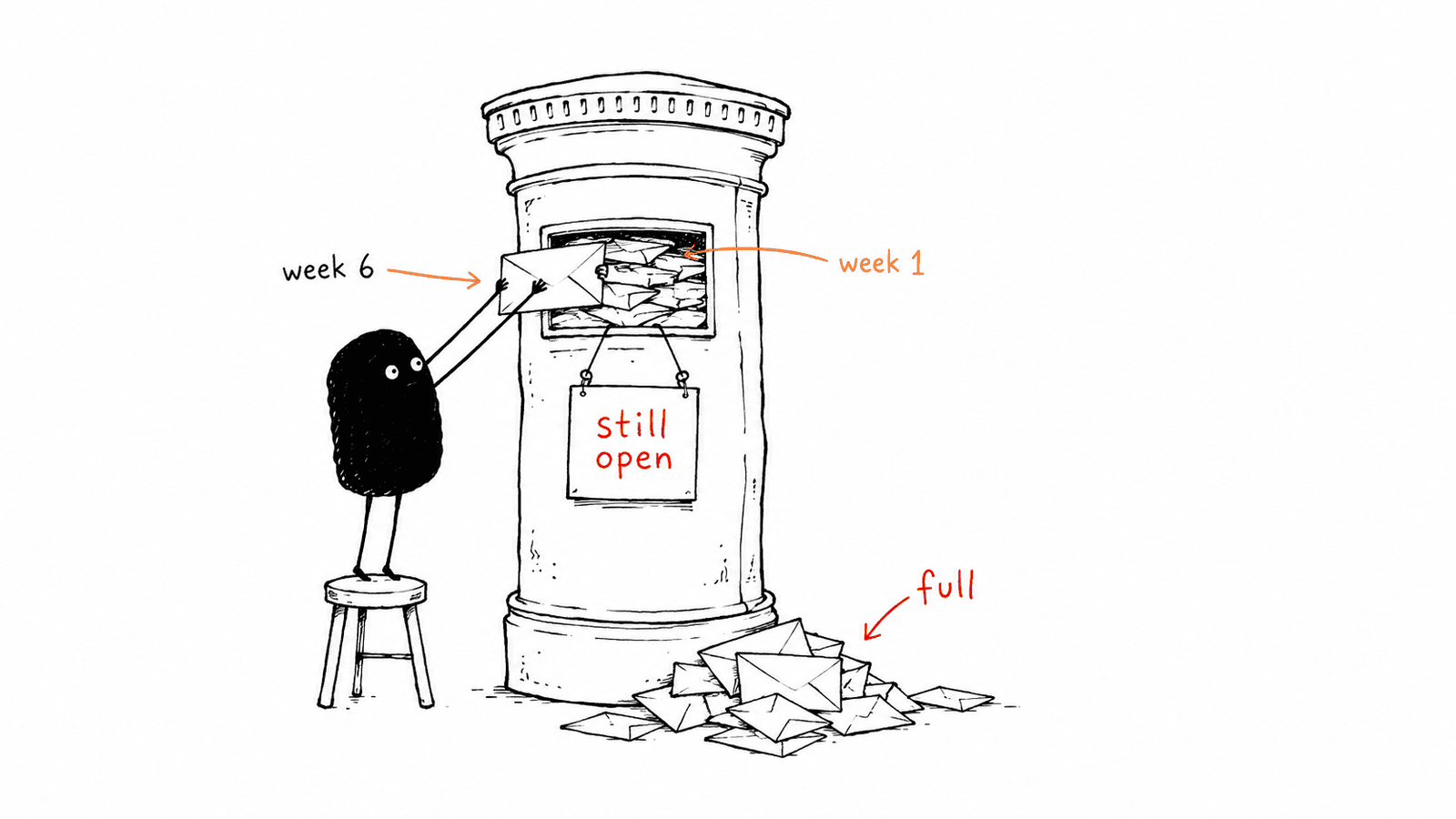
- Apply in the first 1-2 weeks a programme opens wherever possible — this is worth more than a marginally stronger application submitted late.
- Set alerts the moment programmes open rather than checking manually — by the time you notice via general browsing, well-prepared candidates already have.
- Do not wait to "perfect" your application before the window opens. A good application in week one beats a great one in week five.
Get told when each programme opens
Places are filled as applications arrive, so the day applications open decides more than the deadline printed next to it. Leave your email and we will tell you when these programmes go live, while there is still a first fortnight to apply in.
One email when applications open, plus a short weekly round-up through the cycle. Free, and you can leave at any point.
What is actually in the assessment, bank by bank
The stages differ more between banks than the marketing does, and the differences change what you should prepare. J.P. Morgan screens with a game-based behavioural assessment before a human reads anything. Barclays gives you six competency questions at two minutes each. Morgan Stanley runs a genuine numerical reasoning test — the one stage on this list you can straightforwardly revise for. Citi asks you to pick a division before you apply, so a generic answer fails earlier there than elsewhere.
Banks do not publish their processes and they change most cycles, so treat the grid below as a well-sourced starting point and confirm the specifics on the bank’s own application page.
What each bank actually assesses
The stages differ more than the marketing does. Verified 25 August 2026 from candidate-facing sources — banks do not publish their process, and it changes most cycles, so confirm on the bank’s own application page before you rely on it.
| Bank | Stages | What makes it different | How to maximise your chances |
|---|---|---|---|
J.P. Morgan Spring into J.P. Morgan Opens September – October |
| The only major spring week process where a game-based assessment sits early enough to end your application before a human reads it. | Do the Pymetrics practice round properly and unrushed — it is not revisable, but it is losable by rushing. Then spend your prep time on the HireVue: record yourself once, watch it back, and cut your answers to 90 seconds. |
Goldman Sachs Spring Insight / Emerging Leaders Opens September – October |
| Goldman weights the recorded video round more heavily than peers at this stage, so a weak HireVue is rarely rescued later. | Treat the HireVue as the interview, not a formality. Have three specific, non-generic reasons for Goldman over any other bank, and make one of them about a division rather than the firm. |
Morgan Stanley Spring Insight (Institutional Securities / Technology) Opens September, closing November |
| The longest and most staged process of the major spring weeks — four rounds spread across roughly five months, with a genuine numerical test rather than only behavioural screening. | Numerical reasoning is the one spring week stage you can straightforwardly revise for. Do timed practice sets until speed stops being the constraint, then pick your division early — the Institutional Securities week lets you choose a desk mid-week, and knowing which one you want reads as genuine interest. |
Barclays Spring Insight Programme Opens October |
| The tightest video format of the set: six questions, two minutes each, no follow-ups and no recovery from a rambling answer. | Two minutes is the whole brief. Pre-build six competency stories in STAR form, timed to 100 seconds so you land the point before the clock does, and cover teamwork, failure, leadership, conflict, initiative and interest in finance. |
Citi Spring Insight, 1st Year Programme Opens October – November |
| You apply to a named division (Banking, Markets, Services, Global Wealth, Corporate Banking) rather than to the bank, so a generic "why Citi" answer fails earlier here than elsewhere. | Pick the division before you write a word, and make the application about that division’s work. Applying to several Citi divisions with the same answers is the single most visible mistake on this process. |
J.P. Morgan
September – October
Spring into J.P. Morgan
- 1Application + CV — Online form and CV, screened largely automatically on completeness and eligibility.
- 2Pymetrics games — Around a dozen short cognitive and behavioural games, 20-25 minutes, building a behavioural profile rather than testing finance.
- 3HireVue video — One-way recorded interview, roughly 5-7 behavioural and situational questions.
- 4Spring superday — One or two interviews, usually with junior bankers, weighted to motivation and basic commercial awareness.
Different here: The only major spring week process where a game-based assessment sits early enough to end your application before a human reads it.
Do this: Do the Pymetrics practice round properly and unrushed — it is not revisable, but it is losable by rushing. Then spend your prep time on the HireVue: record yourself once, watch it back, and cut your answers to 90 seconds.
Goldman Sachs
September – October
Spring Insight / Emerging Leaders
- 1Application + CV — Online form and CV; expect degree, grades and completeness to screen first.
- 2HireVue video — Pre-recorded video interview — the stage Goldman leans on hardest at insight level.
- 3Final round — Interviews with bankers, run as a shortened version of the firm’s superday format.
Different here: Goldman weights the recorded video round more heavily than peers at this stage, so a weak HireVue is rarely rescued later.
Do this: Treat the HireVue as the interview, not a formality. Have three specific, non-generic reasons for Goldman over any other bank, and make one of them about a division rather than the firm.
Morgan Stanley
September, closing November
Spring Insight (Institutional Securities / Technology)
- 1Application — Online form, opening around September for the following spring.
- 2Online assessments — Numerical reasoning and situational judgement, typically October-November.
- 3Video interview — Recorded round for candidates through the online assessments, November-December.
- 4Assessment centre — Final round for shortlisted candidates, typically January-February.
Different here: The longest and most staged process of the major spring weeks — four rounds spread across roughly five months, with a genuine numerical test rather than only behavioural screening.
Do this: Numerical reasoning is the one spring week stage you can straightforwardly revise for. Do timed practice sets until speed stops being the constraint, then pick your division early — the Institutional Securities week lets you choose a desk mid-week, and knowing which one you want reads as genuine interest.
Barclays
October
Spring Insight Programme
- 1Application — Online form; the full process from submission to decision runs roughly five to six weeks.
- 2SHL assessments — Cognitive ability, personality and a "mindset" assessment, supplied by SHL.
- 3HireVue video — Recorded interview of six competency questions with two minutes to answer each.
Different here: The tightest video format of the set: six questions, two minutes each, no follow-ups and no recovery from a rambling answer.
Do this: Two minutes is the whole brief. Pre-build six competency stories in STAR form, timed to 100 seconds so you land the point before the clock does, and cover teamwork, failure, leadership, conflict, initiative and interest in finance.
Citi
October – November
Spring Insight, 1st Year Programme
- 1Application + CV — Division-specific application with a CV attached, reviewed on a rolling basis.
- 2Online assessments — Screening assessments ahead of the video round.
- 3HireVue video — Recorded video interview.
- 4Interviews — One or two competency and motivation interviews — teamwork, integrity, analytical thinking and genuine interest in finance.
Different here: You apply to a named division (Banking, Markets, Services, Global Wealth, Corporate Banking) rather than to the bank, so a generic "why Citi" answer fails earlier here than elsewhere.
Do this: Pick the division before you write a word, and make the application about that division’s work. Applying to several Citi divisions with the same answers is the single most visible mistake on this process.
Where this comes from. Every row is reconstructed from multiple candidate accounts of recent cycles, not from the banks — which is why each carries a verified date, and why the bank’s own application page is always the final word.
Applying somewhere not listed? The pattern is near-universal: application → automated screen → recorded video → a final round. The stage anatomy below applies whichever bank you are sitting.
What each stage is really testing
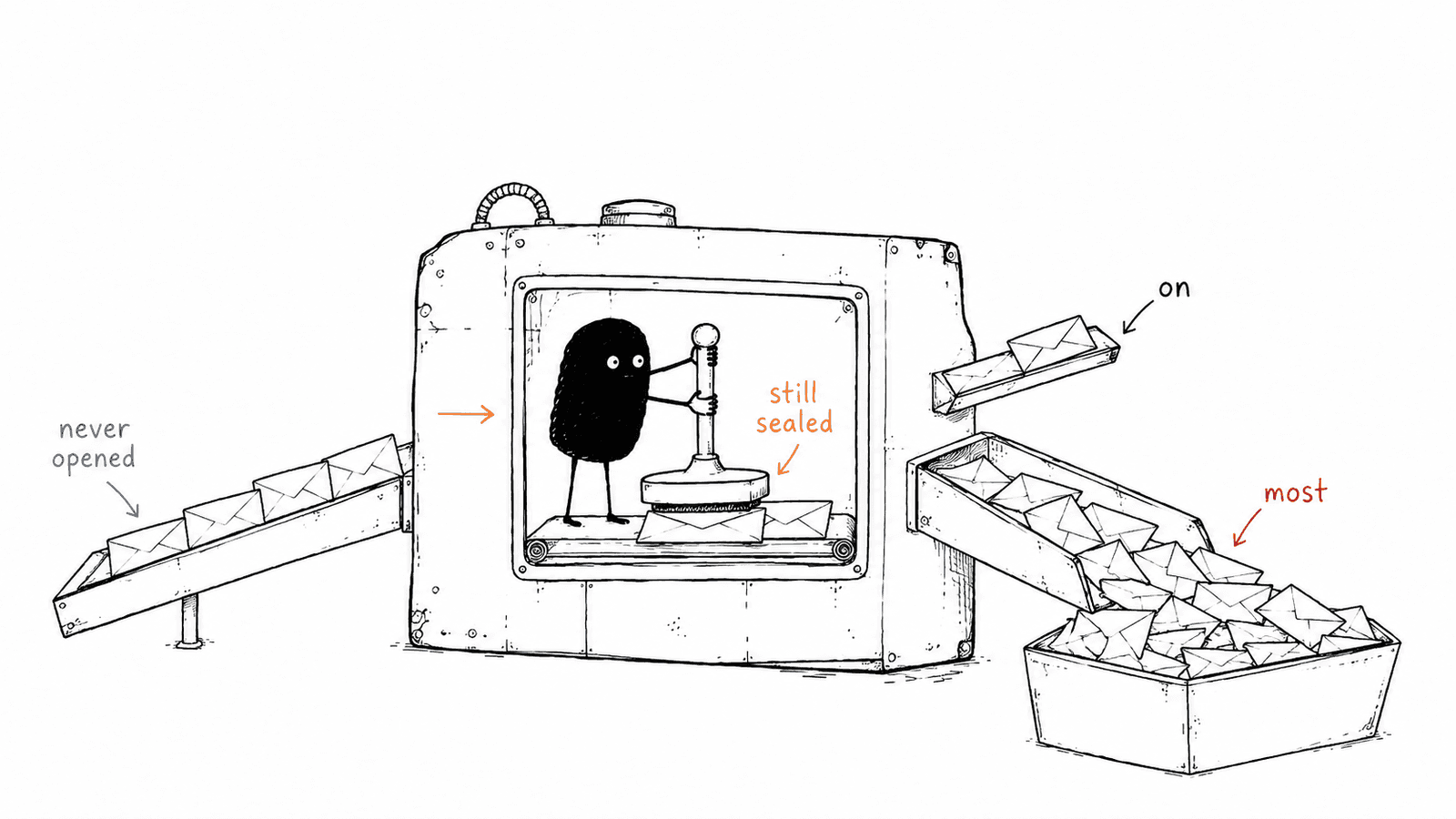
Almost every spring week process is the same four-step shape underneath: an application that filters on timing, an automated assessment that filters on test conditions, a recorded video that filters on structure, and a final round that filters on how you behave around other people. Knowing which of those four you are in tells you what to work on — and, more usefully, what not to bother with.
The single biggest misconception is technical depth. Spring week candidates are first-years with no relevant experience, and no bank expects you to value a company. What is assessed is motivation, coachability and basic commercial awareness — which is good news, because those are learnable in weeks rather than years.
1Online applicationExpand
What it is
A form plus CV, screened for eligibility, degree, grades and completeness — largely automatically at this volume.
What is actually scored
Almost nothing about you as a candidate. This stage is a filter, not an assessment, and its main variable is when you submitted.
How to prepare
Have the CV finished before the window opens, and apply in the first one to two weeks. Places are filled on a rolling basis, so timing outweighs polish here.
What actually ends applications here
Waiting to perfect the application. A good application in week one beats a great one in week five, because in week five the places are gone.
2Online / game-based assessmentExpand
What it is
Numerical and logical reasoning tests, situational judgement, or a game battery such as Pymetrics — 20-40 minutes, unsupervised, usually within days of applying.
What is actually scored
Speed and accuracy under time pressure on the reasoning tests; behavioural traits like risk appetite and attention on the game batteries. No finance knowledge is tested.
How to prepare
Reasoning tests reward timed practice and nothing else — do full-length sets until speed stops being the binding constraint. Game batteries cannot be revised for; do the practice round unhurried and in one sitting.
What actually ends applications here
Starting the test on a phone, between lectures, on a bad connection. This stage rejects more people than any interview, almost always for reasons unrelated to ability.
3Recorded video interview (HireVue)Expand
What it is
A one-way recording: a question appears, you get short preparation time, then one to two minutes to answer, with no interviewer and usually no retakes. Typically five to seven questions.
What is actually scored
Structure, clarity, specificity and evidence that you know what the division does. Competency questions ("a time you worked in a team") and motivation questions ("why this bank") dominate.
How to prepare
Build six STAR stories and time them to roughly 90-100 seconds. Record yourself once and watch it back — everyone is worse and longer than they think on the first take. Look at the camera lens, not your own image.
What actually ends applications here
Running out of clock mid-story, and generic motivation answers that would work for any bank. Both are entirely avoidable and both end applications here.
4Assessment centre / spring superdayExpand
What it is
A half or full day, either in person or virtual: a group case study, one or two competency interviews, sometimes a short written or presentation exercise.
What is actually scored
In the group exercise, how you behave in a group — whether you build on other people’s points, manage the clock, and make sure everyone speaks. In the interviews, motivation and basic commercial awareness rather than technical depth.
How to prepare
Read a market summary daily for the fortnight before, and have one view you can defend on a live story. For the group case, plan to take a role that is visibly useful — timekeeper, synthesiser, rather than trying to talk most.
What actually ends applications here
Dominating the group exercise. Assessors score collaboration, and the candidate who talks over others reliably scores below the one who said less and structured better.
5The week itselfExpand
What it is
Four or five days of desk rotations, talks, networking events and usually a group project presented at the end. It is not a holiday: the week is the final assessment stage.
What is actually scored
Everything, including the parts that do not look like assessment. Bankers are asked afterwards who stood out, and their answer draws on coffee queues and evening drinks as much as the formal sessions.
How to prepare
Prepare questions in advance for each division you will meet, take notes visibly, and send short thank-you notes that reference something specific from the conversation.
What actually ends applications here
Treating the social parts as off the record, and asking questions whose answers are on the bank’s website. Both are read as a lack of genuine interest.
The group case study, and why it is not the one you are thinking of
Ask about "the case study" and most search results will hand you a private equity exercise: a timed LBO model, a disguised target, a recommendation to a deal team. That is a real thing, and it is not remotely what happens at a spring week assessment centre.
A spring week group case study is a short business brief given to four to six candidates, roughly 45-60 minutes to prepare, a ten-minute recommendation to a panel, then questions. No modelling. No finance background assumed. The scoring is about behaviour in a group — whether you build on other people’s points, whether you keep the team to time, whether you make sure the quiet person speaks. The candidate who tries to dominate reliably scores below the one who said less and structured better.
The same two words describe four different exercises, depending on which rung of the ladder you are standing on. They are worth separating before you prepare for the wrong one.
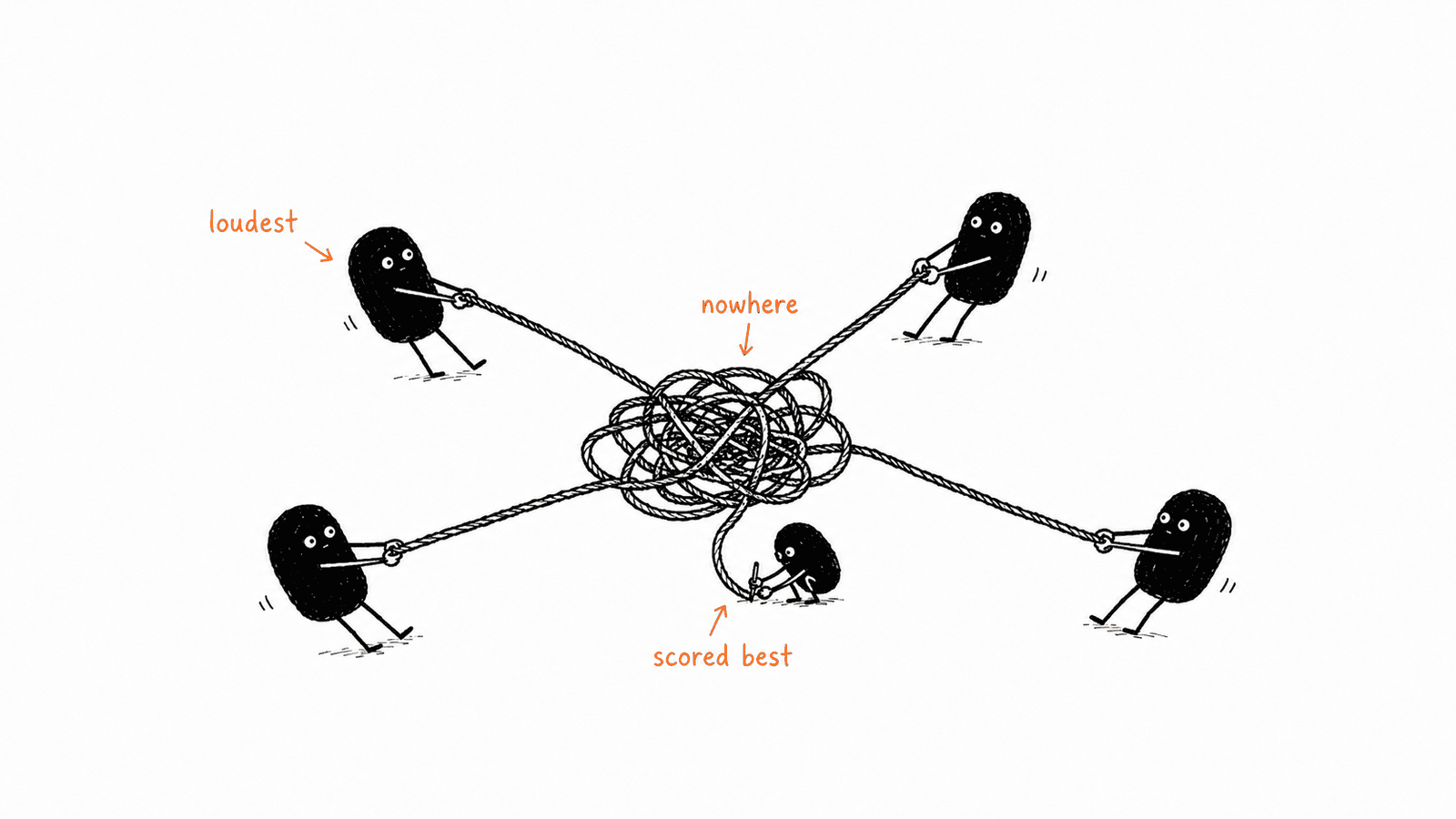
- Spring week: group discussion and presentation, behavioural scoring, no model.
- Summer internship and full-time analyst: written case or short valuation exercise, sometimes a group element, with real technical expectations.
- Associate and lateral hires: a full modelling case, usually an LBO or merger model, with an investment recommendation.
- Private equity: the 2-6 hour (or 24-72 hour take-home) LBO and recommendation exercise most articles are actually describing.
What the week itself assesses
Expect a mix of desk rotations or a single-desk placement, networking events with analysts and associates, a group project or presentation, and informal one-on-ones that are more evaluative than they appear.
The unofficial rule that separates strong from weak spring week performances: banks are watching how you behave when you think you are not being assessed — at coffee, in the lift, at evening drinks — as closely as the formal sessions. Bankers are asked afterwards who stood out, and their answer draws on all of it.
How spring week converts into a summer internship offer
At most bulge-bracket banks, a strong spring week performance leads to a conversion interview or a direct fast-track offer into the summer internship the following year — spring week is designed as the first filter in a pipeline that runs spring week → summer internship → full-time graduate offer, with each stage laddering into the next. This is why an early, well-prepared spring week application often matters more to your eventual full-time outcome than a strong summer internship application in isolation — it buys you an extra shot at the funnel a year earlier.
From people who have actually done one
Everything above is process. What process cannot tell you is what the week feels like from the inside — which questions land badly, what the other candidates were like, what the people who converted did differently in the room.
Coming soon
What the week is actually like, from people who were there
Which questions land badly, what the other candidates were like, and what the people who converted did differently in the room. Every account is submitted to us directly and verified before it appears here.
Talk to a spring weeker before you apply
One twenty-minute conversation with someone who sat the process at your target bank last year is worth more than any guide, this one included. We match first-years with people who have done it — free, and not a sales call.
Talk to someone who has done one
We are matching first-years with people who did a spring week at the banks they are applying to — a short, honest conversation, not a sales call. Tell us which banks and we will introduce you when we have a match.
Frequently asked questions
When do UK spring week applications open?
The most competitive programmes typically open across August to October the year before, with a smaller second wave from some banks into January. Check the L3VLUP spring weeks track for live, currently-open windows rather than relying on last year’s dates.
Do spring weeks have fixed deadlines?
Most do not — banks assess and fill places as applications arrive and close early once slots are gone. Treat any advertised deadline as a latest-possible date, not a target, and apply as early in the window as you can.
What is actually in a spring week assessment?
Almost always four stages: an online application and CV screen, an automated assessment (numerical and logical reasoning, or a game-based battery such as Pymetrics), a recorded one-way video interview of five to seven questions, and a final assessment centre or short superday combining a group case study with one or two competency interviews. No technical finance knowledge is tested at any stage.
Is there a case study in a spring week assessment centre?
Usually yes, but it is a group case study, not a modelling exercise. Four to six candidates get a short business brief, roughly 45-60 minutes to prepare, and about ten minutes to present a recommendation to a panel. No model is built and no finance background is assumed — what is scored is how you work in a group. The timed LBO case study most search results describe belongs to private equity recruiting, several rungs further up.
How competitive are spring weeks compared to summer internships?
Extremely — often more so per place than the summer internship, because spring week class sizes are smaller and applicants include every ambitious first-year student, not just those who already have relevant experience.
Does a spring week guarantee a summer internship offer?
No, but strong performance is the primary feeder into one at most bulge-bracket banks, usually via a conversion interview or fast-track process. It significantly improves your odds rather than guaranteeing the outcome.
Do I need to know technical finance for a spring week?
No. Spring weeks target first-years with no relevant experience, so the assessment weights motivation, coachability and basic commercial awareness instead. Being able to discuss one market story with a defensible view is worth more than half-learned valuation theory, which is easy to expose and impresses nobody at this stage.
Related guides
Investment Banking
The US Answer to a Spring Week: Sophomore Insight Programs
9 min read
Investment Banking
Investment Banking Case Studies: Spring Week vs Analyst vs Associate
8 min read
Investment Banking
Spring Week vs Summer Internship vs Industrial Placement
6 min read
Investment Banking
The 2027 Investment Banking Recruiting Timeline
12 min read
Investment Banking
UK Assessment Centres: The Full Day, Stage by Stage
8 min read
Sales & Trading
Sales & Trading Interviews: What Actually Gets Tested
8 min read
Plan the cycle with someone who converted three of these
Suro did spring weeks at Citi, Morgan Stanley and Bank of America Merrill Lynch and was fast-tracked from all three into assessment centres. A diagnostic session maps your term, your target banks and the order to apply in. The open windows themselves are on the spring weeks track, free.