Spring Weeks, tracked live.
Every spring week programme we track across investment banks and finance firms — opening dates, deadlines and application links, synced daily.
4 open now · 5 opening soon · 9 tracked · synced 9 Oct 2026 · statuses recomputed from deadlines on every view
Why the date you apply decides this
Almost every bank on this page assesses spring week applications as they arrive and closes the moment places are gone, often weeks before the deadline it advertised. So the same application sent in the first fortnight of a window and the sixth week of it are not the same application. Work back from the opening dates below rather than the closing ones, and treat any programme not yet open as a date to be ready for.
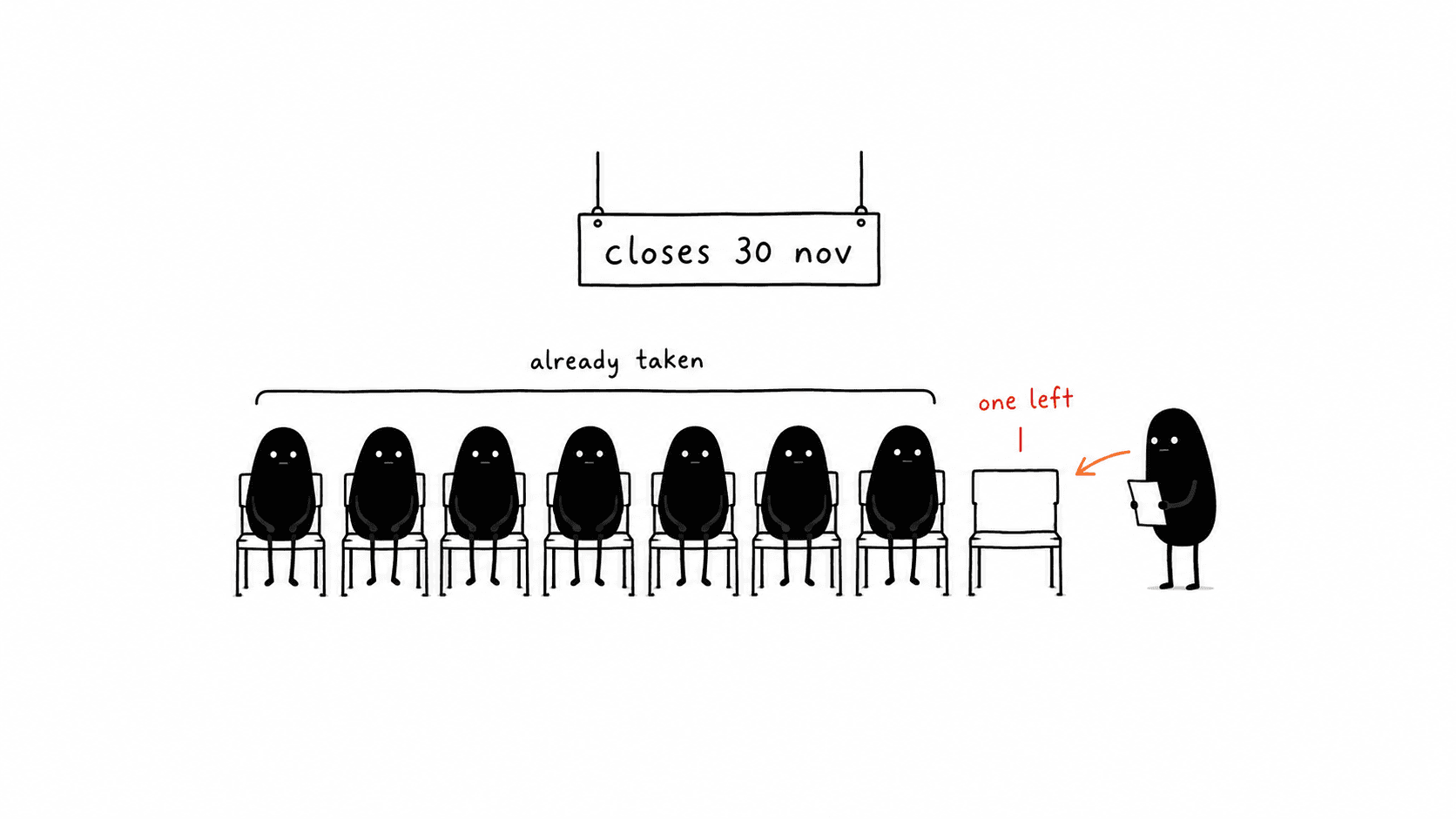
Open now (4)
Spring Insight Week, Global Advisory · Investment Banking · London · Internship · closes 2026-12-15
Spring Week, Quant Trading · Quant · London · Internship · closes 2026-12-31
Spring Insight Days · Quant · London · Internship · closes 2026-11-30
Spring Insight Event · Other · EMEA · Internship · closes 2026-12-04
Get told when each programme opens
Spring week places are filled as applications arrive, so the day applications open matters more than the deadline printed next to it. Leave your email and we will tell you when these programmes go live, while there is still a first fortnight to apply in.
One email when applications open, plus a short weekly round-up through the cycle. Free, and you can leave at any point.
The opening calendar (5)
When applications for each are expected to open, soonest first. Where a firm has not published a date the row says so, and every row links to the firm’s own application page rather than asking you to take ours.
September 2026
Process: App > Pymetrics > HireVue > Superday
Window typically opens in September; the firm has not published an exact date. Assessed on a rolling basis once open.
Process: App > HireVue > Final round
Window typically opens in September; the firm has not published an exact date. Assessed on a rolling basis once open.
Process: App > OA > VI > AC
Window typically opens in September and closes in November; exact dates not yet announced.
October 2026
Spring Insight, 1st Year Programme
Process: App > OA > HireVue > Interviews
Window typically opens October–November; you apply to a named division, so pick it before you write a word.
Date not yet published
Process: App > Two interactive assessments > Assessment centre
Barclays now brands this the Discovery Programme. Its own page currently takes a registration of interest rather than an application and publishes no opening date, so October is the pattern from previous cycles rather than a confirmed date. Participants may be considered for a 2027 internship.
What each bank actually assesses
The stages differ more than the marketing does. Verified 25 August 2026 from candidate-facing sources — banks do not publish their process, and it changes most cycles, so confirm on the bank’s own application page before you rely on it.
| Bank | Stages | What makes it different | How to maximise your chances |
|---|---|---|---|
J.P. Morgan Spring into J.P. Morgan Opens September – October |
| The only major spring week process where a game-based assessment sits early enough to end your application before a human reads it. | Do the Pymetrics practice round properly and unrushed — it is not revisable, but it is losable by rushing. Then spend your prep time on the HireVue: record yourself once, watch it back, and cut your answers to 90 seconds. |
Goldman Sachs Spring Insight / Emerging Leaders Opens September – October |
| Goldman weights the recorded video round more heavily than peers at this stage, so a weak HireVue is rarely rescued later. | Treat the HireVue as the interview, not a formality. Have three specific, non-generic reasons for Goldman over any other bank, and make one of them about a division rather than the firm. |
Morgan Stanley Spring Insight (Institutional Securities / Technology) Opens September, closing November |
| The longest and most staged process of the major spring weeks — four rounds spread across roughly five months, with a genuine numerical test rather than only behavioural screening. | Numerical reasoning is the one spring week stage you can straightforwardly revise for. Do timed practice sets until speed stops being the constraint, then pick your division early — the Institutional Securities week lets you choose a desk mid-week, and knowing which one you want reads as genuine interest. |
Barclays Spring Insight Programme Opens October |
| The tightest video format of the set: six questions, two minutes each, no follow-ups and no recovery from a rambling answer. | Two minutes is the whole brief. Pre-build six competency stories in STAR form, timed to 100 seconds so you land the point before the clock does, and cover teamwork, failure, leadership, conflict, initiative and interest in finance. |
Citi Spring Insight, 1st Year Programme Opens October – November |
| You apply to a named division (Banking, Markets, Services, Global Wealth, Corporate Banking) rather than to the bank, so a generic "why Citi" answer fails earlier here than elsewhere. | Pick the division before you write a word, and make the application about that division’s work. Applying to several Citi divisions with the same answers is the single most visible mistake on this process. |
J.P. Morgan
September – October
Spring into J.P. Morgan
- 1Application + CV — Online form and CV, screened largely automatically on completeness and eligibility.
- 2Pymetrics games — Around a dozen short cognitive and behavioural games, 20-25 minutes, building a behavioural profile rather than testing finance.
- 3HireVue video — One-way recorded interview, roughly 5-7 behavioural and situational questions.
- 4Spring superday — One or two interviews, usually with junior bankers, weighted to motivation and basic commercial awareness.
Different here: The only major spring week process where a game-based assessment sits early enough to end your application before a human reads it.
Do this: Do the Pymetrics practice round properly and unrushed — it is not revisable, but it is losable by rushing. Then spend your prep time on the HireVue: record yourself once, watch it back, and cut your answers to 90 seconds.
Goldman Sachs
September – October
Spring Insight / Emerging Leaders
- 1Application + CV — Online form and CV; expect degree, grades and completeness to screen first.
- 2HireVue video — Pre-recorded video interview — the stage Goldman leans on hardest at insight level.
- 3Final round — Interviews with bankers, run as a shortened version of the firm’s superday format.
Different here: Goldman weights the recorded video round more heavily than peers at this stage, so a weak HireVue is rarely rescued later.
Do this: Treat the HireVue as the interview, not a formality. Have three specific, non-generic reasons for Goldman over any other bank, and make one of them about a division rather than the firm.
Morgan Stanley
September, closing November
Spring Insight (Institutional Securities / Technology)
- 1Application — Online form, opening around September for the following spring.
- 2Online assessments — Numerical reasoning and situational judgement, typically October-November.
- 3Video interview — Recorded round for candidates through the online assessments, November-December.
- 4Assessment centre — Final round for shortlisted candidates, typically January-February.
Different here: The longest and most staged process of the major spring weeks — four rounds spread across roughly five months, with a genuine numerical test rather than only behavioural screening.
Do this: Numerical reasoning is the one spring week stage you can straightforwardly revise for. Do timed practice sets until speed stops being the constraint, then pick your division early — the Institutional Securities week lets you choose a desk mid-week, and knowing which one you want reads as genuine interest.
Barclays
October
Spring Insight Programme
- 1Application — Online form; the full process from submission to decision runs roughly five to six weeks.
- 2SHL assessments — Cognitive ability, personality and a "mindset" assessment, supplied by SHL.
- 3HireVue video — Recorded interview of six competency questions with two minutes to answer each.
Different here: The tightest video format of the set: six questions, two minutes each, no follow-ups and no recovery from a rambling answer.
Do this: Two minutes is the whole brief. Pre-build six competency stories in STAR form, timed to 100 seconds so you land the point before the clock does, and cover teamwork, failure, leadership, conflict, initiative and interest in finance.
Citi
October – November
Spring Insight, 1st Year Programme
- 1Application + CV — Division-specific application with a CV attached, reviewed on a rolling basis.
- 2Online assessments — Screening assessments ahead of the video round.
- 3HireVue video — Recorded video interview.
- 4Interviews — One or two competency and motivation interviews — teamwork, integrity, analytical thinking and genuine interest in finance.
Different here: You apply to a named division (Banking, Markets, Services, Global Wealth, Corporate Banking) rather than to the bank, so a generic "why Citi" answer fails earlier here than elsewhere.
Do this: Pick the division before you write a word, and make the application about that division’s work. Applying to several Citi divisions with the same answers is the single most visible mistake on this process.
Where this comes from. Every row is reconstructed from multiple candidate accounts of recent cycles, not from the banks — which is why each carries a verified date, and why the bank’s own application page is always the final word.
Applying somewhere not listed? The pattern is near-universal: application → automated screen → recorded video → a final round. The stage anatomy below applies whichever bank you are sitting.
How this route works
A spring week is a one-week insight programme run mainly by UK and European investment banks for first-year students on a three-year degree, or second-years on a four-year course. It is the earliest formal entry point into banking, and it matters far more than its length suggests: banks convert a large share of spring week attendees straight into summer internship offers, which in turn convert into graduate roles. Getting one compresses the whole funnel by two years.
Applications open unusually early — most banks launch in September and October for the following spring, and the majority assess on a rolling basis, so the deadline printed on the site is the date applications close, not the date decisions are made. Applying in week one of the window is materially different from applying in the final week.
The screening is front-loaded and largely automated: an online application, then numerical and situational judgement tests, then a recorded video interview, and only then a human assessment centre. Most candidates are eliminated by the tests before anyone reads their CV, which is why practising the test formats is a better use of early time than polishing the application.
Frequently asked questions
When do spring week applications open?
Most UK banks open spring week applications in September and October for the following spring, roughly six months ahead. Nearly all assess on a rolling basis, so places are filled continuously and applying early in the window is a genuine advantage over applying near the deadline.
Who is eligible for a spring week?
Typically first-year students on a three-year degree or second-years on a four-year or integrated masters course — the year before you would be eligible for a summer internship. Some banks accept penultimate-year students into separate insight programmes instead. Eligibility is set per bank, so check the individual programme.
Does a spring week lead to a summer internship?
Often, yes. Banks use spring weeks as an early screening pool and convert a substantial share of attendees into fast-tracked summer internship offers, sometimes with a shortened interview process. That conversion is the main reason spring weeks are worth the effort.
Before you apply
A deadline is only useful if the application behind it is ready. The screening stages differ by programme type, so the kit does too.
How UK spring weeks actually work
The long version of this page: the window, the assessment at each bank, the group case, and how a week converts into a summer offer.
Psychometric tests, explained
Spring weeks screen hardest on tests: numerical, SJT and game-based. What each measures and how to prepare.
Mental math drill (free)
Timed arithmetic practice for the numerical tests, and the daily habit that moves scores.
The finance CV
No experience expected at first year, but the page still has to be clean. The structure and the errors to avoid.
CV review
$25Your actual CV, read by a practitioner and returned with margin notes in 48 hours. Worth doing once, before the first application rather than after the third rejection.
Cover letter review
$50Line by line, plus a rewritten opening paragraph as a worked example. For the banks that still read one.
Send this to someone applying 🗓️
Instagram and TikTok have no desktop share link, so copy the caption and paste it into the app.
Tracking roles is step one
Applying well is the rest of it. These are the ways to get prepared before the deadline.
CV Review by a Human
Written margin-note feedback on structure, impact bullets and ATS-readability. Reviewed by Suro, not an AI score.
$25 48h turnaround
Cover Letter Review by a Human
Line-by-line review of argument, tailoring and tone, with a rewritten opening as a worked example.
$50 48h turnaround
L3VLUP Pro
The subscription: personalised alerts, Apply Packs, every answer marked, full history and the whole research library.
$25 /month
Applying? Don’t walk in cold.
Free drills in the Labs, structured workflows in Skills, and the Investment Banking prep guide.