Candidates routinely walk into sales and trading interviews with investment banking prep — accounting, DCF, deal walk-throughs, and get asked none of it. S&T tests markets awareness, quick quantitative reasoning, probability intuition and communication under pressure. Here is the actual question bank and how to prepare for it.
The four things S&T interviews test
- Markets awareness: where are the major indices, rates, oil, key FX pairs — roughly, right now, and what has moved markets in the past month. Not knowing the 10-year yield within range is disqualifying in a way no accounting question is.
- Mental maths under pressure: quick multiplication, percentages, bid-ask arithmetic, spoken fast with someone watching. Speed and composure are the test, not difficulty.
- Probability and games: expected value questions, dice and coin problems, "would you take this bet" — testing whether you think in EV terms naturally.
- Communication and conviction: can you state a view in two sentences, defend it under pushback, and update visibly when given new information — the daily texture of a desk.
"Pitch me a trade" — the S&T version of the stock pitch
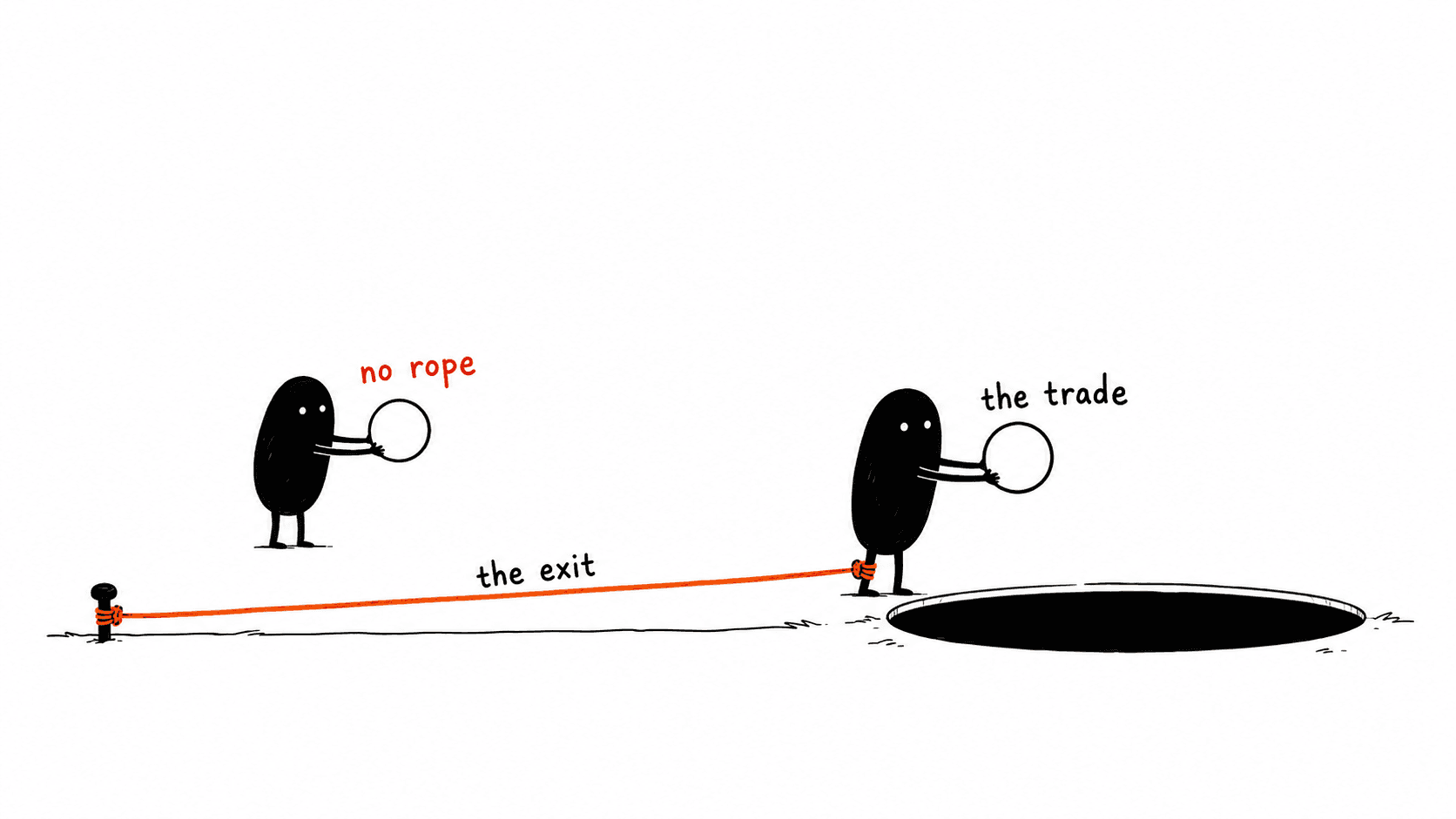
Structure: the view (one sentence — what happens and by when), the instrument (how you express it: outright, spread, options, and why that expression), the entry and the exit (levels, not vibes), and the risk (what kills the trade, where you stop out, and what the asymmetry is).
It does not need to be exotic. A simple, well-risk-managed view beats a convoluted structure you cannot defend. The follow-up will be "what if you're wrong?" — the quality of your answer there matters more than the trade itself.
Probability questions and how to handle them
Expect expected-value framing: "I'll pay you the number shown on a die roll — what would you pay to play?" (EV = 3.5). Then variants: "what if you can re-roll once?" — now you need a strategy (keep 4/5/6, re-roll 1/2/3; EV = 4.25) and to narrate it. The pattern across all of them: state the framework, compute out loud, sanity-check the answer. Silence is the failure mode, exactly as in the paper LBO.
Sales vs. trading vs. structuring — know which seat you are pitching
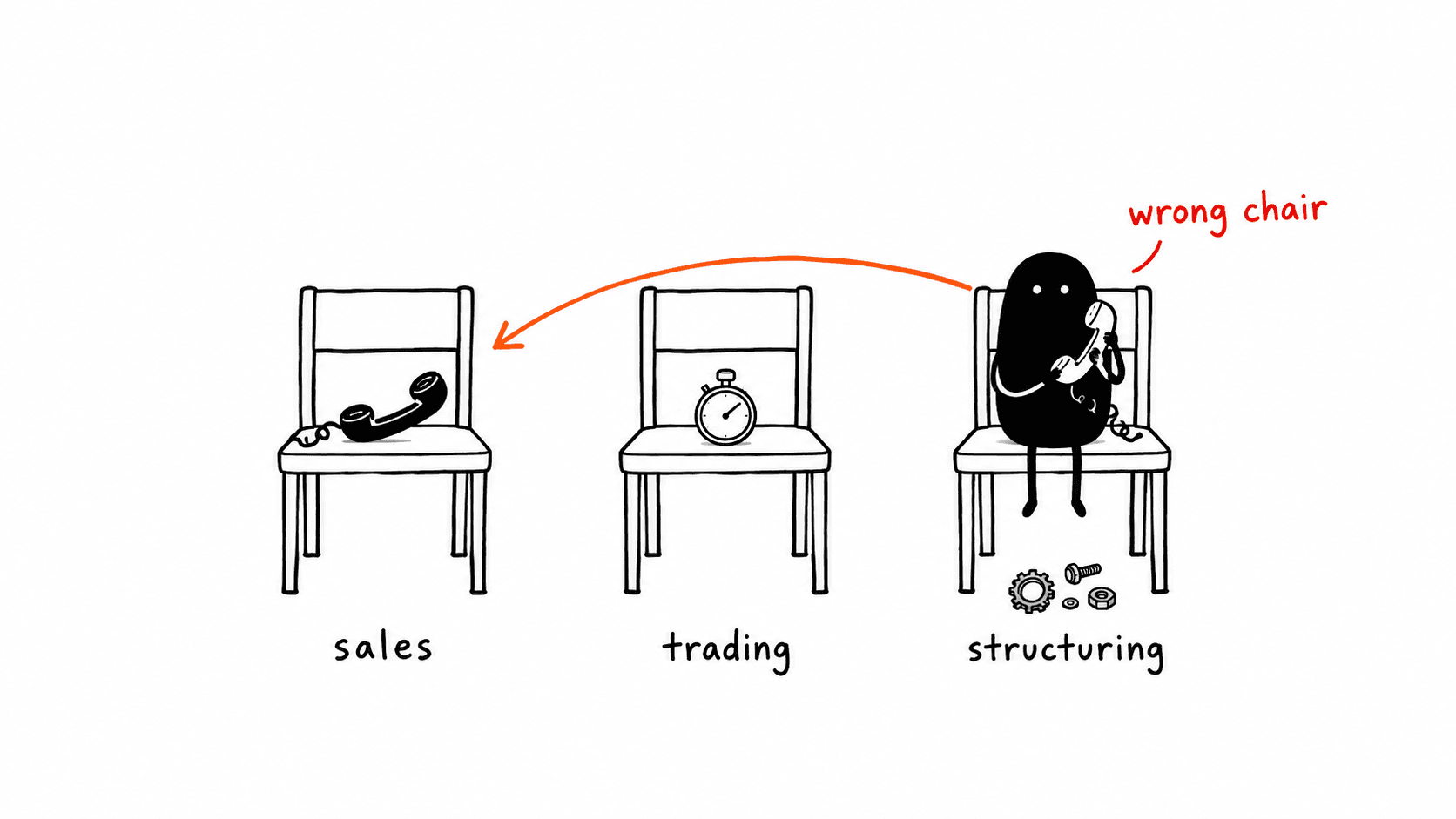
- Trading: risk management and price-making — the interview leans quant and composure.
- Sales: client relationships and market colour — the interview leans communication, markets narrative, and "how would you explain X to a client".
- Structuring: derivatives engineering — leans technical, payoff diagrams, "design a product that gives a client Y exposure".
- Saying "I'd be happy with any" reads as not understanding the differences. Have a first choice and a reason.
How to prepare in two weeks
- Daily: 15 minutes of market data (indices, 2s/10s, oil, DXY, one mover and why) — a compounding habit interviewers can detect instantly.
- Mental maths reps under time pressure — our Mental Math Gym drills exactly this format, free.
- Prepare two trade ideas (one you love, one backup in a different asset class) with entry, exit, and risk defined.
- Practise the probability classics out loud until narrating EV logic is automatic.
Frequently asked questions
Do sales and trading interviews test accounting and DCF?
Rarely and lightly, if at all. The core tests are markets awareness, mental maths under pressure, probability intuition, and communicating a view — a completely different bank of questions from IB.
What markets data should I know walking into an S&T interview?
Rough current levels for the major equity indices, the 2-year and 10-year Treasury yields, oil, and the key FX pairs — plus what has driven markets in the last month. Precision matters less than being in range and having a view on why.
What makes a good trade pitch in an interview?
A clear one-sentence view with a timeframe, a sensible instrument choice, defined entry and exit levels, and honest risk framing — where you are wrong and what it costs. Simple and defensible beats clever and fragile.
Related guides
Want this applied to your recruiting?
Reading is the easy part. For practitioner feedback tailored to your situation, work 1:1 with Suro.