IB technical interviews draw from a surprisingly small pool of core questions — the difficulty comes from follow-up chains and speed, not obscurity. Master the frameworks below and you cover the majority of what first-round and Superday interviewers ask. For each, we give the structure of a strong answer and the trap most candidates fall into.
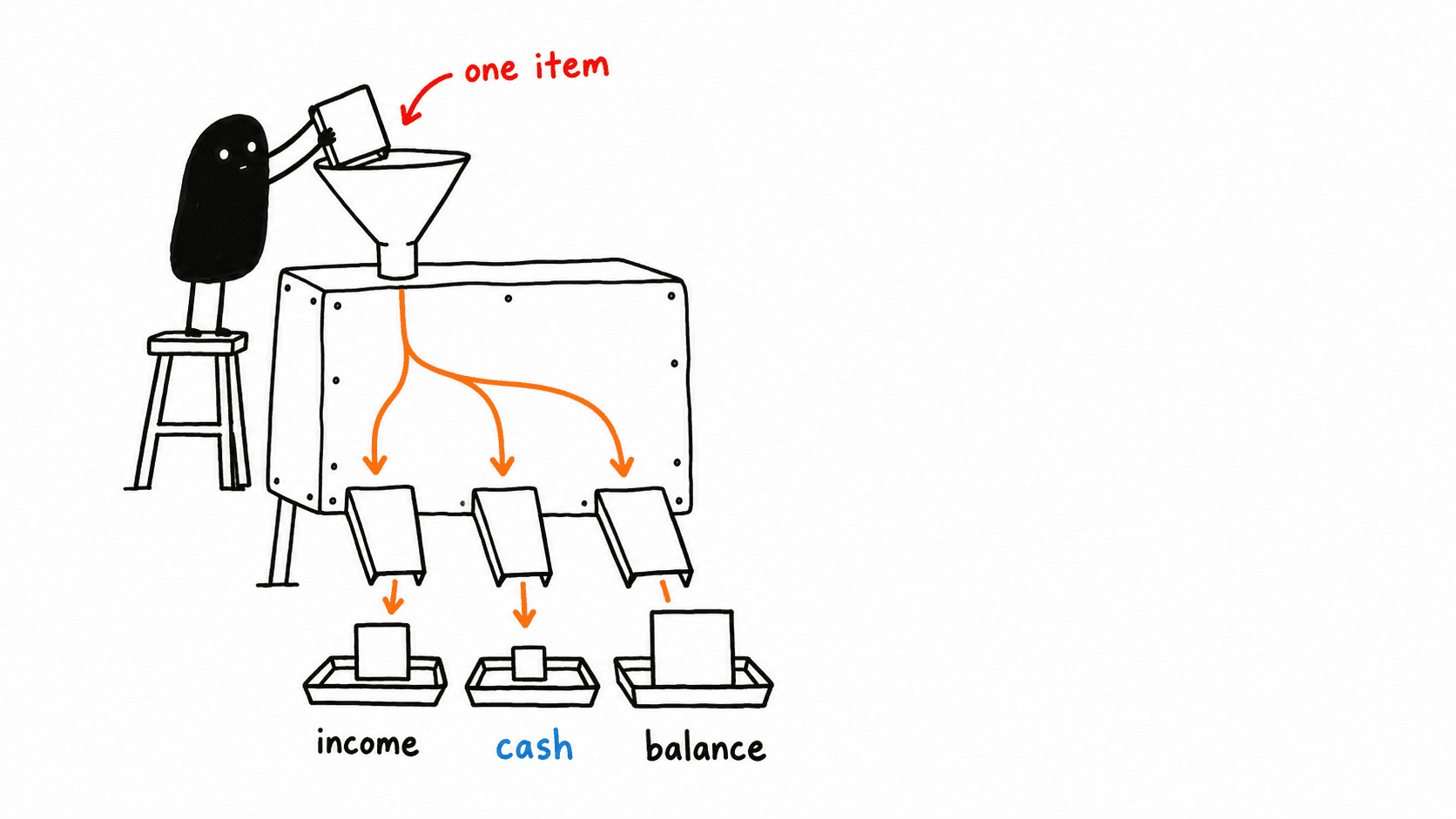
The accounting flow-through: "$10 of depreciation"
The classic: walk me through how $10 of depreciation affects the three statements (assume 40% tax, or whatever rate they give — 2026 processes commonly use 25%).
Framework, at 25% tax: Income statement — operating income falls $10, tax falls $2.50, net income falls $7.50. Cash flow — start with net income down $7.50, add back the $10 non-cash depreciation, so cash is UP $2.50. Balance sheet — cash up $2.50, PP&E down $10 (assets down $7.50); retained earnings down $7.50. It balances.
The trap: rushing the balance sheet and failing to tie it. Slow down on the last step; interviewers wait for exactly that.
Valuation: the three methods and when each is highest
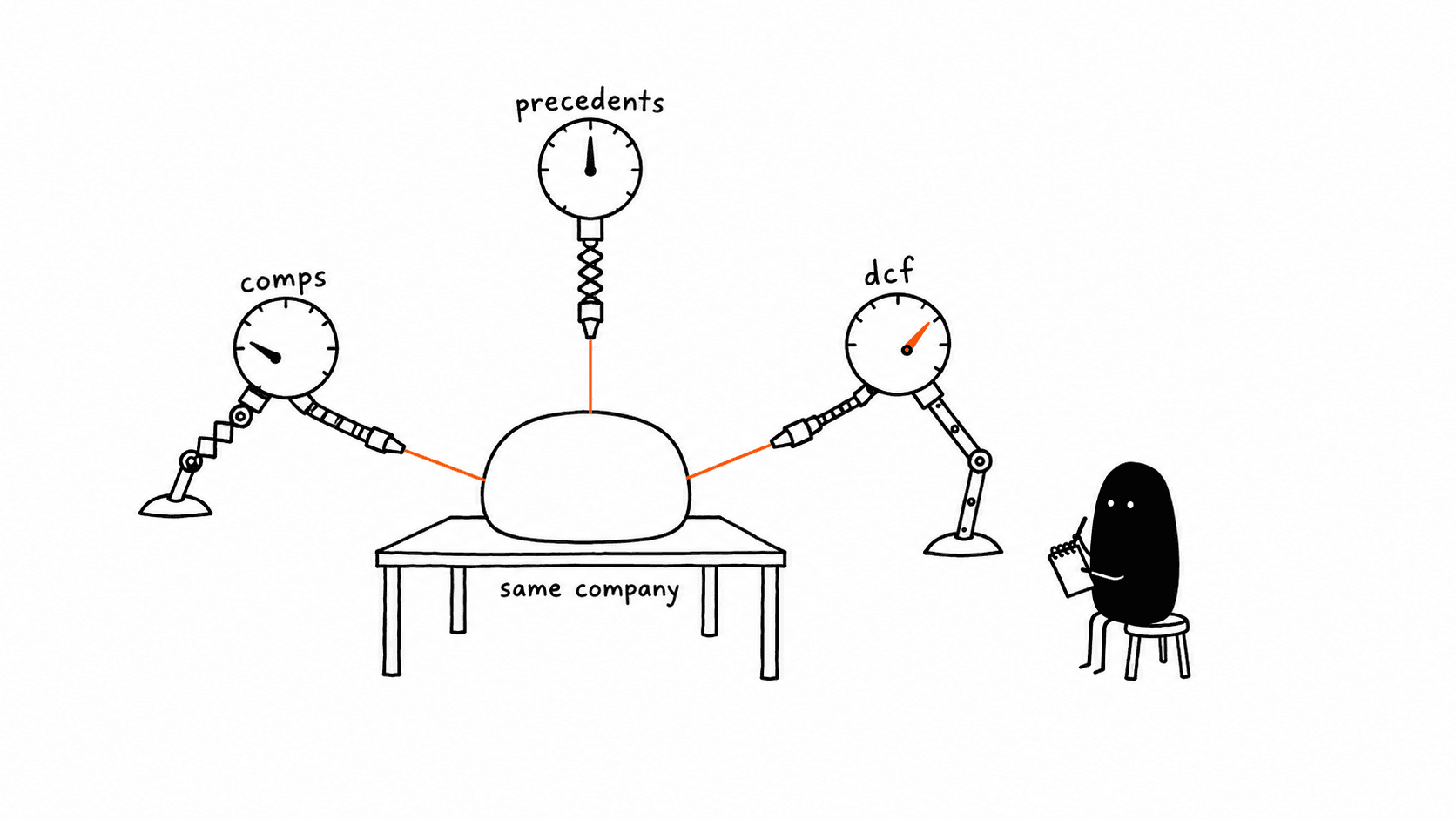
Framework: comparable companies (market-based, minority stake), precedent transactions (market-based, includes control premium), and DCF (intrinsic). Expect "which gives the highest value?" — usually precedents, because of the control premium; the DCF is the wildcard because it depends entirely on your assumptions.
Follow-up chains: why might comps trade above precedents in a frothy market; when is a DCF inappropriate (unpredictable cash flows: early-stage, banks, commodities); what multiple you would use for a specific industry and why. Drill multiple intuition with Name That Multiple in L3VLUP Labs.
DCF mechanics: the walkthrough and the WACC chain
Framework for "walk me through a DCF": project unlevered free cash flows for 5-10 years → discount at WACC → estimate terminal value (Gordon growth or exit multiple) → discount terminal value → sum to enterprise value → bridge to equity value (subtract net debt) → per share.
The follow-up chain is predictable: what is WACC (weighted cost of debt and equity) → how do you get cost of equity (CAPM: risk-free + beta × ERP) → what happens to value if rates rise (WACC up, value down) → why is terminal value dangerous (often 60-75%+ of total value — say that you would flag anything above ~75% and re-check assumptions).
The trap: mixing levered and unlevered cash flows with the wrong discount rate. Unlevered FCF pairs with WACC; levered FCF pairs with cost of equity. Getting this crisp is a differentiator.
M&A: accretion/dilution in your head
Framework for all-stock deals: compare the P/E ratios. Acquirer P/E higher than target P/E (after premium) → accretive; lower → dilutive. For cash deals: compare the target's earnings yield (E/P) to the after-tax cost of the cash or debt funding it.
Expect a numeric version: "Acquirer at 20x buys a target at 10x with stock — accretive or dilutive?" (Accretive — cheaper earnings bought with expensive paper.) Then the twist: "at what premium does it flip?" You can watch these mechanics move live on the free Accretion/Dilution animator in L3VLUP Labs.
The trap: forgetting synergies and financing mix in follow-ups. The sharp candidate volunteers: "that is before synergies, and the funding mix changes the answer".
The new class: AI-in-the-workflow questions
Banks increasingly ask how you would use AI tools on real tasks: "How would you use AI to prep a company profile?" The strong answer mirrors professional practice: delegate the gathering and first-pass extraction, verify every number against the primary source, and keep the judgment — what matters and what the story is — yourself. Answering with that delegate/verify/decide structure signals you have actually worked this way rather than read about it.
Frequently asked questions
How many technical questions should I prepare for?
The core pool is roughly 30-40 questions across accounting, valuation, DCF, M&A and LBO basics. Depth on the core beats breadth on the obscure — interviewers grade the follow-up chain, not the first answer.
What tax rate should I use in flow-through questions?
Use whatever the interviewer gives you; if they do not, state your assumption out loud ("assuming 25% tax") and proceed. Stating assumptions is graded positively.
Do boutiques ask harder technicals than bulge brackets?
Often yes — elite boutiques (Evercore, PJT, Centerview and peers) are known for deeper technical chains and modelling tests, because analysts get earlier responsibility. Prepare to at least Superday depth for any boutique process.
Related guides
The full bank, with the follow-ups printed
Every technical question above and the rest of the pool, each with the answer, what it tests, and the wrong answer the interviewer is listening for.