MoIC
Multiple on Invested Capital. The ratio of money returned to money invested (for example, 3.0x means you tripled your investment). A core PE returns metric alongside IRR.
MoIC · the mechanism
30 sec read
Compute a money multiple, say what it hides, and pair it with the measures LPs actually read.
Where it comes up. An LP asks what the fund has actually returned, having read a 2.6x on the front page and found the DPI on page eleven.
Compute it
Total value out divided by total invested. Gross MOIC is at the deal level before fund fees; net MOIC is what a limited partner receives after management fees and carried interest. Quoting one when someone means the other is a real and common confusion.
Know what it ignores
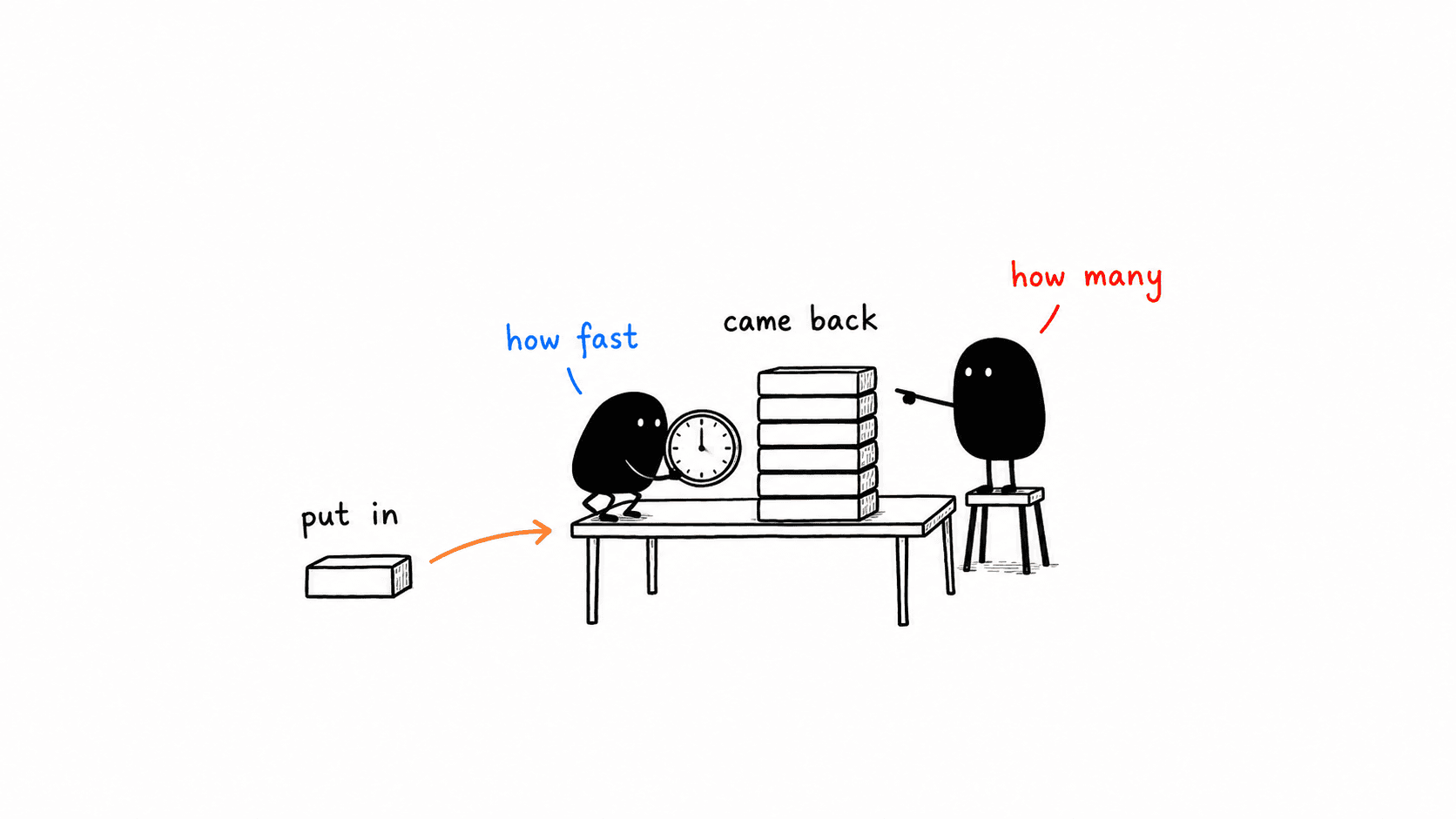
Time, entirely. A 2.0x in three years and a 2.0x in eight are the same MOIC and completely different investments. This is the exact blind spot IRR fills, which is why the two are always quoted together.
Distinguish realised from unrealised
A MOIC that includes portfolio companies still held is partly a valuation opinion. DPI, distributions over paid-in capital, counts only money actually returned. A fund with a strong MOIC and a weak DPI has marks rather than cash, and in a slow exit market that distinction is the whole conversation.
Worked through
A fund that called $500m and has returned $600m, with remaining holdings marked at $700m.
- DPI (realised)
- $600m ÷ $500m = 1.2x
- RVPI (unrealised)
- $700m ÷ $500m = 1.4x
- TVPI / MOIC
- 1.2x + 1.4x = 2.6x
A 2.6x headline of which less than half is cash. Nothing is wrong with that in a young fund; in a ten-year-old one it is the number to ask about, because unrealised value is the manager’s own estimate.
Check yourselfTwo funds both report 2.0x. One has a DPI of 1.8x, the other 0.4x. What is the difference?
Answer once you have one →
One has returned nearly all of it in cash; the other is holding marks. The second fund’s multiple depends on exits it has not achieved at valuations it set itself. Same headline, very different level of proof, and it is the first thing an experienced LP looks at.
Be able to say this back next week
- Distinguished gross from net, and realised from unrealised
- Said MOIC ignores time entirely, which is what IRR is for
- Asked for DPI before believing a strong multiple
Why MoIC matters in interviews
MoIC is the plain-English counterpart to IRR — how many times you got your money back, and interviewers pair the two to check that you understand what each one hides. Limited partners care about MoIC because it is the number that funds their own obligations; IRR is what makes a track record look good.
How it works in practice
MoIC (multiple on invested capital) = total value returned / total capital invested. Return $450m on a $150m equity cheque and the MoIC is 3.0x. It says nothing about how long that took.
Gross MoIC is measured at the deal level before fund fees and carried interest; net MoIC is what limited partners actually receive. The gap is material — roughly 2.0x gross can net down to around 1.7x after a 2-and-20 structure.
MoIC and IRR diverge over time. A 2.5x over three years is roughly a 36% IRR; the identical 2.5x over seven years is roughly 14%.
What candidates get wrong
- Quoting MoIC without a hold period. The two numbers are only meaningful together.
- Confusing MoIC with TVPI or DPI at fund level. DPI counts only realised distributions; TVPI includes unrealised marks on portfolio companies still held.
- Forgetting that MoIC is unaffected by early distributions, which is exactly why a dividend recap can transform IRR while leaving MoIC unchanged.
MoIC: frequently asked questions
What is a good MoIC?
At the deal level, sponsors generally underwrite to 2.5x-3.0x gross over a five-year hold. Anything above 3.0x is a strong outcome, and below 2.0x typically means the thesis did not play out. The figure only means something alongside the hold period.
Can a deal have a high MoIC and a poor IRR?
Yes, and it is common in long-hold situations. A 3.0x return earned over ten years is only about a 12% IRR, which would sit below many funds' target return despite tripling the money.
Where MoIC comes up
Keep reading
Private Equity interview prepRelated Private Equity terms
Go further than reading
The written material is free. These are the ways to get it applied to your own work.
CV Review by a Human
Written margin-note feedback on structure, impact bullets and ATS-readability. Reviewed by Suro, not an AI score.
$25 48h turnaround
Cover Letter Review by a Human
Line-by-line review of argument, tailoring and tone, with a rewritten opening as a worked example.
$50 48h turnaround
L3VLUP Pro
The subscription: personalised alerts, Apply Packs, every answer marked, full history and the whole research library.
$25 /month
Browse the full glossary — 340 finance recruiting and technical terms, in plain English.