This is the letter for the advisory and capital markets side of a bank: M&A, sector coverage, equity capital markets, debt capital markets, leveraged finance and restructuring, at spring week, summer analyst, off-cycle and graduate level. Those seats are paid a fee when a transaction completes, which is why the evidence a screener looks for here is transaction evidence, and why paragraph two of this letter is a deal paragraph. If you are applying to corporate, commercial or retail banking, the business is lending and relationships rather than transactions, the evidence is different, and the corporate banking guide linked below is the one you want. The letter itself has a narrow job: show that you understand the role, give a credible reason for choosing this bank, and offer evidence that you can do the work. At many banks it barely gets read, and at some it is optional. Where it is required, which covers most UK and European applications and nearly every boutique, it is screened fast and binned faster. The goal is not to impress. It is to give a tired screener no easy reason to reject you and one or two concrete reasons to keep reading.
Applying to corporate, commercial or retail banking instead? Different business, different evidence. The corporate and commercial banking cover letter
The four-paragraph structure
Four paragraphs, one page, 250 to 400 words. The shape is not a convention for its own sake: it maps onto the four questions a screener is answering while they read, in the order they answer them. Which role is this for, is this person serious about us, can they do the work, and is there anything here that saves me a decision.
Everything that does not answer one of those four questions is taking space from something that does.
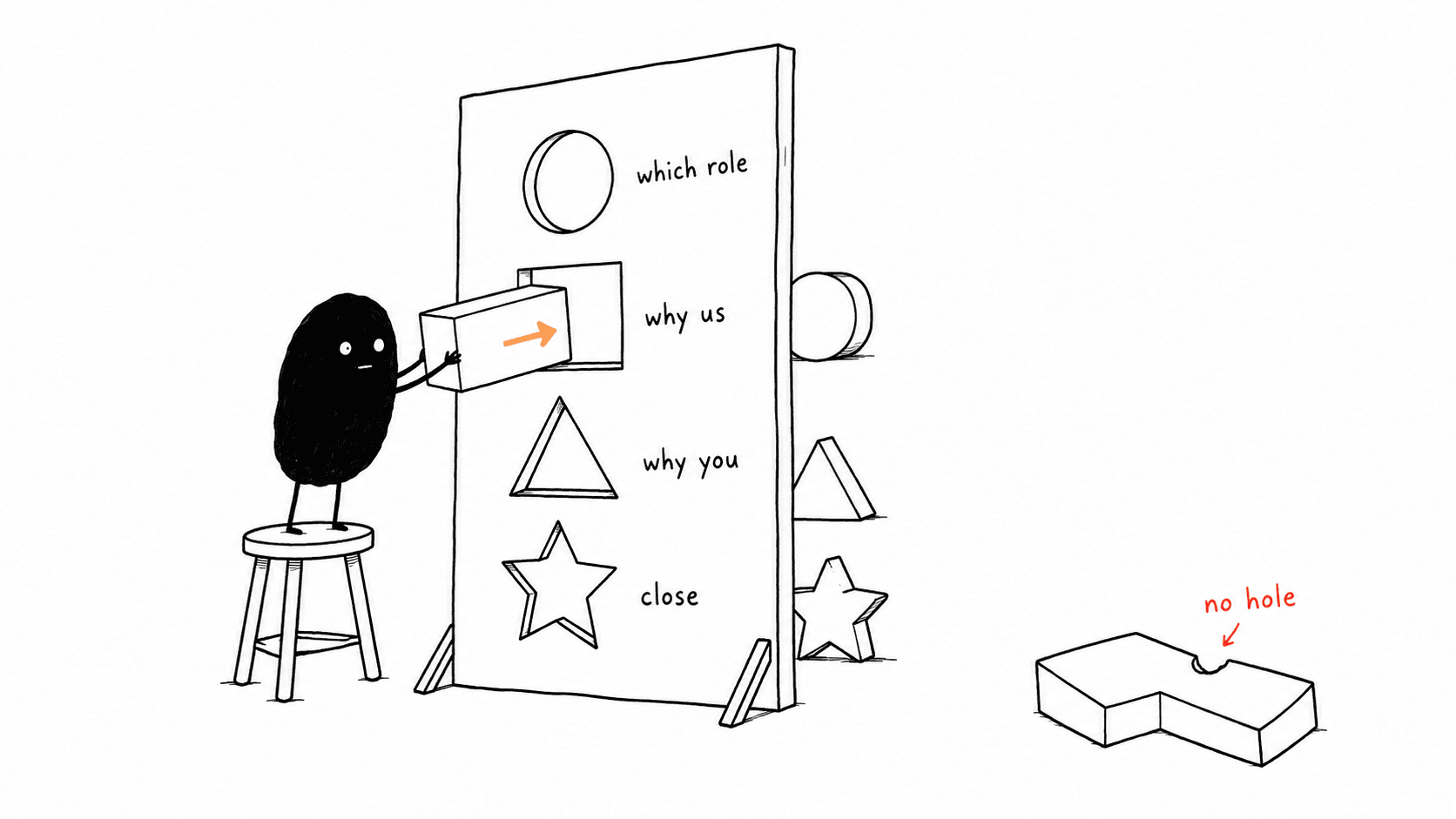
- Paragraph 1 — who you are and what you are applying for, in two sentences. Name the programme and division precisely (a wrong programme name is an instant bin).
- Paragraph 2 — why this bank, specifically: a deal it advised on, a platform strength, a person you spoke to (by name and takeaway, not just "I spoke to someone"). Generic praise that fits any bank signals a mail-merge.
- Paragraph 3 — why you: two or three pieces of evidence (internship, project, society role) with concrete detail, each tied to what the job actually requires (analytical work, stamina, teamwork under deadlines).
- Paragraph 4 — close in two sentences. Availability, thanks, no drama. Do not restate the whole letter.
What that looks like written down
The structure is easy to agree with and hard to apply, because the difficulty is not knowing that paragraph two should say why this bank. It is knowing what a good version of that sentence sounds like next to a bad one.
Here is a letter for a 2027 industrials summer analyst seat, with the reasoning beside each paragraph rather than underneath it.
Opening
I am applying to the 2027 Summer Analyst programme in your Industrials group. I am a second-year Economics student at Warwick, and I have spent the last year building the case that industrials is where the interesting balance-sheet work is right now.
Why
Names the programme, the group and the year in the first line, because the reader is sorting applications and needs to place yours before they read anything else. The second sentence buys the rest of the letter by promising a view rather than an adjective.
Why this bank
Your team advised Smiths Group on the separation of its detection business. What struck me reading the announcement was the decision to spin rather than sell into a soft market, and to take the dis-synergies on the chin for a cleaner multiple on what was left.
Why
The paragraph that separates a real application from a merged one. It names a deal the team actually did and says something about it that required reading past the headline. No adjectives about the bank: "prestigious", "market-leading" and "culture of excellence" appear in every letter and carry no information.
Why you
I built a three-statement model of the standalone detection business to test whether it could carry its own capital structure, and found it could at about 2.5x net debt to EBITDA before interest cover became uncomfortable. I run the valuation society at Warwick, where I teach that model to forty people a term.
Why
Evidence in the shape of the job. A number the reader can interrogate is worth more than a list of skills, and it gives an interviewer something to open with. The second sentence shows the work is habitual rather than staged for the application.
Close
I would welcome the chance to discuss the role. Thank you for your time.
Why
Two lines. The close is not where anything is won, and a long one reads as reluctance to stop.
The deal, the university and the numbers are illustrative. Swapping them for yours is the whole exercise: a letter that would work for two banks without editing is a letter that works for neither.
The "why this bank" paragraph, twice
This is the paragraph that decides the letter, and it is the one people rewrite last and fastest. Two versions of the same applicant:
"I am applying to your firm because of its outstanding reputation in M&A and its collaborative culture, which aligns closely with my own values. Your firm's market-leading position makes it the ideal place for me to begin my career."
"Your team advised Smiths Group on the separation of its detection business. What struck me reading the announcement was the decision to spin rather than sell into a soft market, and to take the dis-synergies on the chin for a cleaner multiple on what was left."
The first could be sent to forty banks without editing a word, which is exactly what a screener assumes has happened. The second could only be sent to one. That is the entire test, and you can apply it to your own draft in about ten seconds: swap in a competitor's name and see whether anything breaks.
You do not need a deal nobody has heard of. A well-covered transaction is fine, provided what you say about it could only come from having read past the headline.
Where the letter matters, and where it does not
The advice to agonise over a cover letter and the advice to ignore it are both true, in different places, and the confusion between them costs people time in the wrong direction.
At the large banks with high-volume graduate intakes, the first filter is usually the application form and the online tests, and the letter is read late if at all. The rational move is a correct, clean, short letter that takes forty minutes rather than four hours.
At boutiques, at regional offices, and on off-cycle applications, the letter is often read by someone who will interview you, sometimes the person hiring. Here it does real work, and the deal paragraph is what gets a reply.
The asymmetry is the point. A weak letter rarely wins you anything at a bulge bracket, and a weak letter loses you a boutique. Write for the second case and the first is covered.
What to cut
Most first drafts are the right length and the wrong content: three hundred words of which perhaps eighty are load-bearing. Cutting is faster than writing, so do it first.
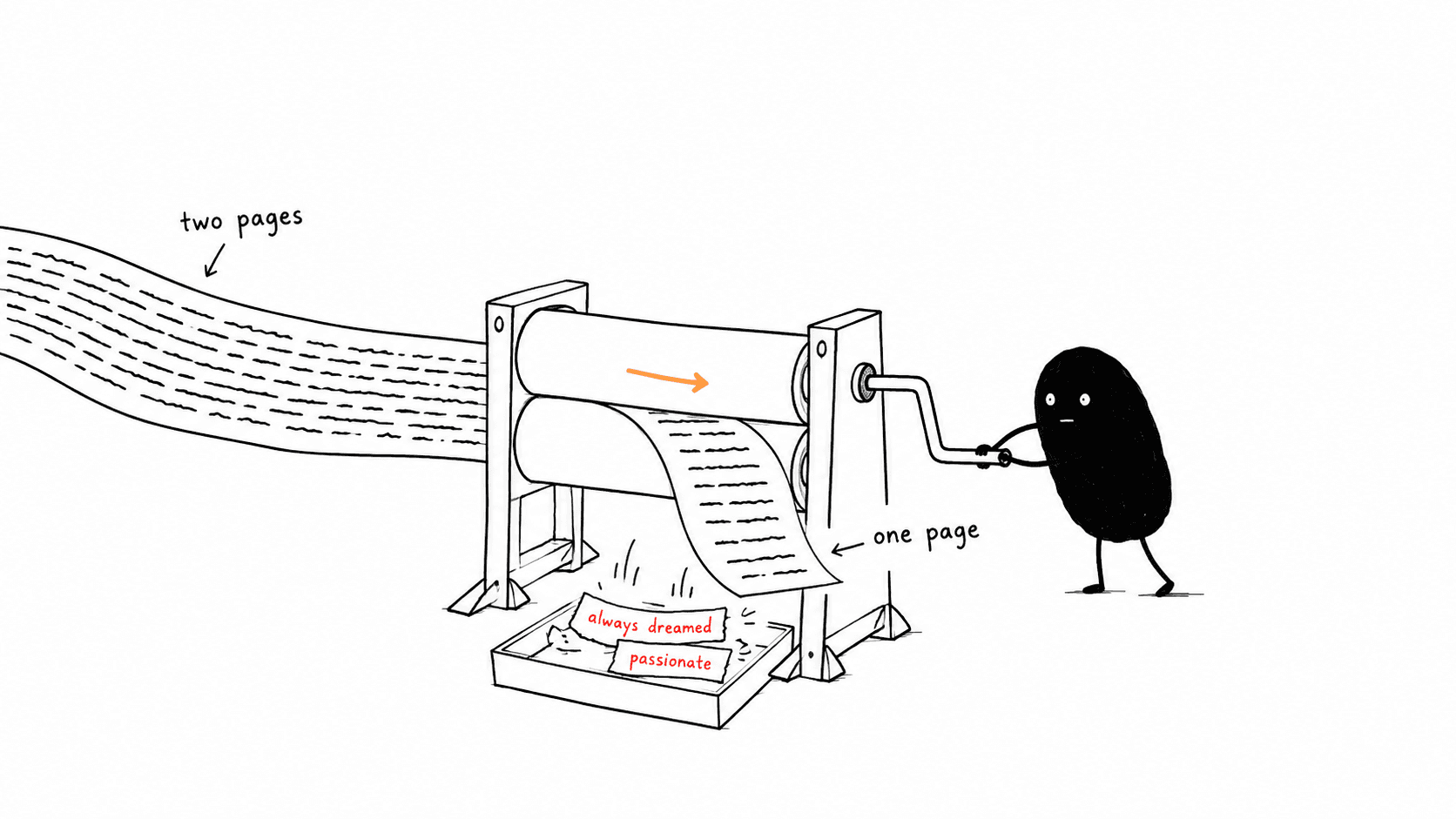
- "I am passionate about finance" and every variant — passion is demonstrated by the evidence in paragraph 3, never asserted.
- Your life story in chronological order — the resume already does that.
- Flattery paragraphs about the bank's prestige — screeners at prestigious banks are the least impressed by being told they are prestigious.
- Anything that pushes the letter past one page. One page is a hard ceiling; 250-400 words is the working range.
The mistakes that get letters binned
These are not stylistic preferences. Each one is a decision a screener can make without finishing the page, which is why they are worth more attention than anything in the prose.
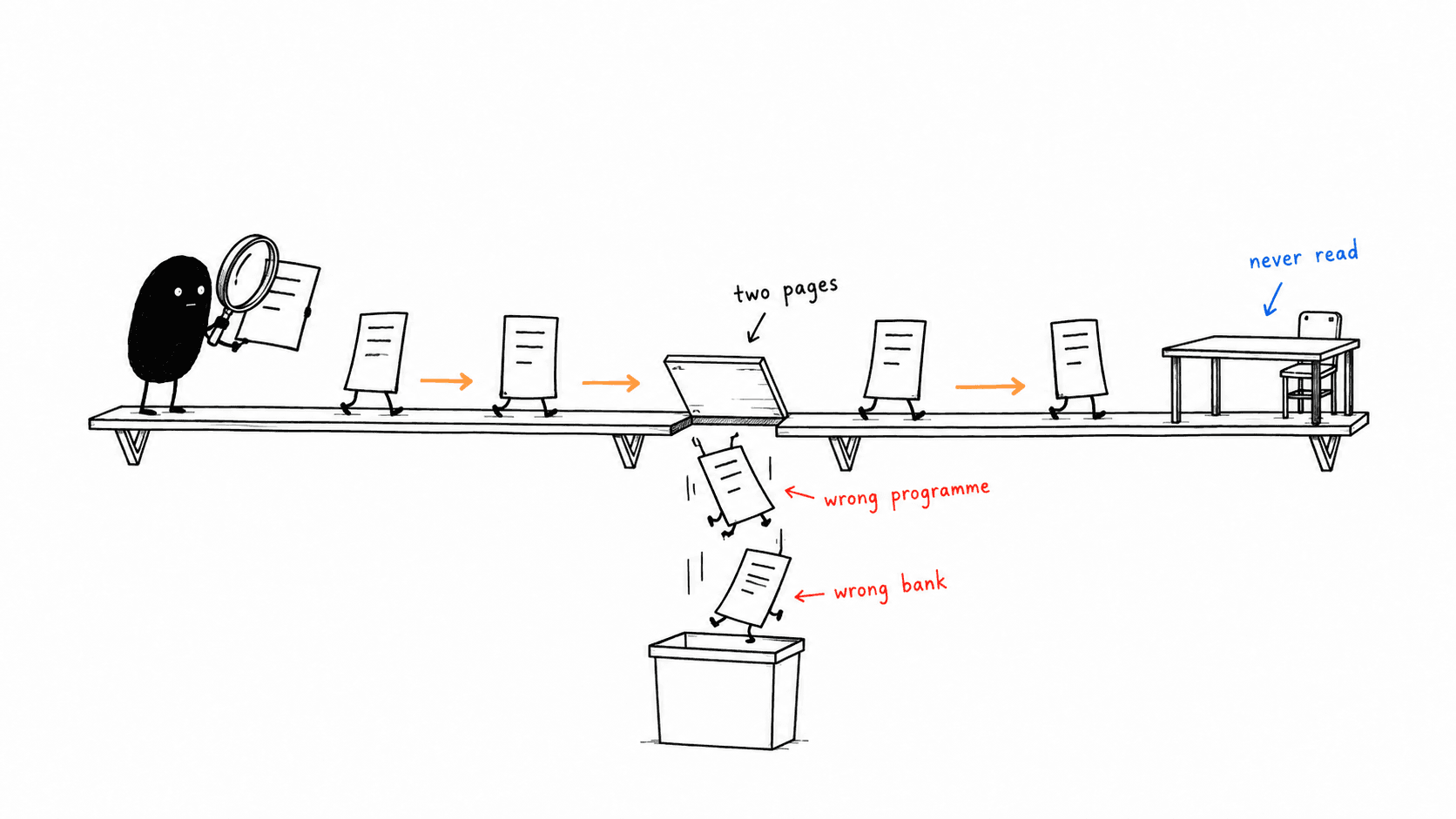
- Wrong bank name or programme name anywhere in the letter — it happens constantly with mail-merged applications, and it is fatal.
- Claims with no evidence ("strong analytical skills" with nothing behind it).
- Typos — in an industry where the job is producing error-free documents under pressure, a typo in a one-page letter is read as a work-quality preview.
- Repeating the resume line by line instead of selecting and expanding the two or three most relevant points.
A note on tone
Write like a junior professional, not a supplicant and not a salesperson. Short sentences. Concrete nouns. The register you would use in a well-written email to a senior colleague. If a sentence would make you cringe reading it aloud to a banker across a desk, cut it.
Frequently asked questions
How long should an investment banking cover letter be?
One page maximum, and in practice 250-400 words. Screeners give it roughly thirty seconds; length beyond that works against you.
Do banks actually read cover letters?
It varies: some screen them seriously (more common in the UK and Europe and at boutiques), others barely look. Since you rarely know which, write a tight one whenever it is required — a bad letter can hurt even where a good one only mildly helps.
Should I mention specific deals in a cover letter?
Yes, if you can say something specific about why the deal interests you — one sentence of substance beats a list of deal names. Naming deals without a reason reads as keyword stuffing.
Who should I address an investment banking cover letter to?
A named person if you have one, from a coffee chat or an event, spelled correctly. If you do not, "Dear Hiring Manager" is fine and nobody has ever been rejected for it. Guessing a name and getting it wrong is materially worse than not using one.
Do I need a different cover letter for every bank?
The middle paragraph changes for every bank; the rest is largely reusable. If you can swap a competitor's name into your draft and nothing reads oddly, the paragraph is doing no work and a screener will see that in a second.
Is a spring week cover letter different from a summer analyst one?
The structure is the same and the evidence paragraph is lighter, because nobody expects a first-year to have an internship behind them. A society role, a modelling project or a stock you have followed and can defend all count. What does not change is the paragraph explaining why this bank.
Should I explain a low grade or a gap in the cover letter?
Only if it is visible on the CV and would otherwise be the reader's open question. One factual sentence, no apology, no long explanation, and then back to the evidence. A paragraph of justification draws more attention to it than the grade itself.
Can I use the same cover letter for a boutique and a bulge bracket?
Not usefully. The boutique letter is more likely to be read by someone who will interview you, so the deal paragraph carries more weight and a generic one is more costly. Writing for the boutique case produces a letter that also works at the larger bank.
Now try it
Cover Letter Studio
Draft it against the checks a reader actually applies, and score it before you send it.
Related guides
Investment Banking
The Finance CV: One Page That Survives a 30-Second Skim
9 min read
Investment Banking
"Why This Bank?" — Building an Answer That Isn't Generic
6 min read
Investment Banking
The 2027 Investment Banking Recruiting Timeline
12 min read
Investment Banking
Top Investment Banking Technical Questions (With Answer Frameworks)
10 min read
Corporate Banking
Corporate and Commercial Banking Cover Letters
12 min read
Want this applied to your recruiting?
Reading is the easy part. For practitioner feedback tailored to your situation, work 1:1 with Suro.